Tesla Ends Cybertruck Plans for Down Under
After seven years of waiting, Tesla has canceled Australian and New Zealand Cybertruck reservations, refunding deposits and offering incentives to switch to its standard sedans.
By Jian Chen ·
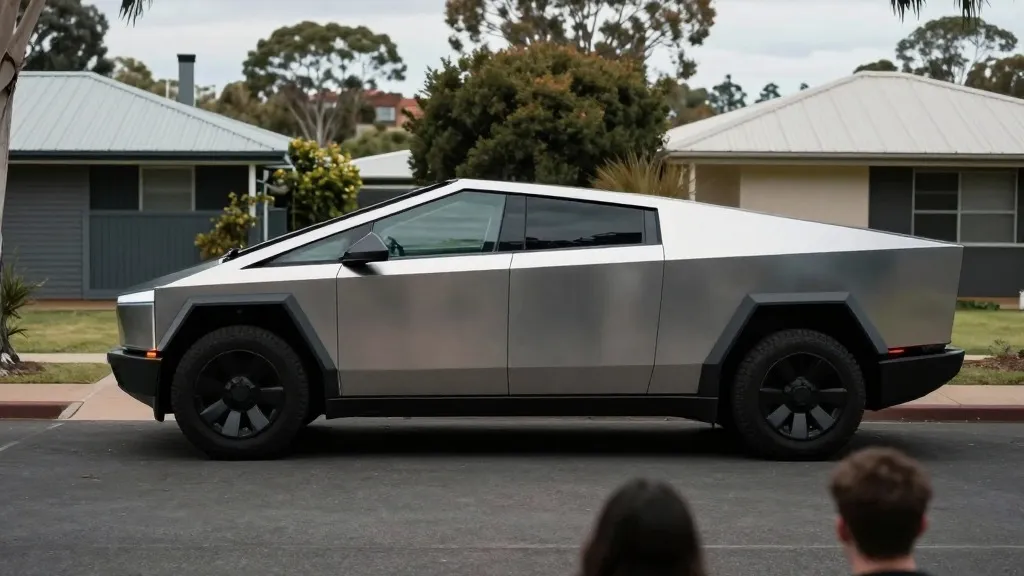
Tesla has officially withdrawn its electric pickup truck from the Australian and New Zealand markets, ending a seven-year wait for local customers. The company sent notifications to reservation holders today, confirming that their orders are void and that their initial deposits will be fully refunded. This decision marks the final end of the Cybertruck’s expansion into these right-hand-drive regions, a project that has been in limbo since the vehicle’s initial reveal.
The timeline of this cancellation stretches back to November 2019, when Australians began placing A$150 deposits to secure their spot in line. For nearly seven years, customers have held reservations for a vehicle that Tesla has now decided it will not build for their specific markets. The notification emails, which have been widely shared on social media platforms and forums, state that after careful consideration, the plans to produce the truck for these regions have been discontinued. Tesla confirmed that refunds will be processed within 30 days of the notification.
In an effort to retain these customers, Tesla is offering a strategic incentive. Reservation holders who place an order for a new Model 3 or Model Y, both of which are manufactured in right-hand drive, will receive a free one-year subscription to the company’s Full Self-Driving (Supervised) software. This move suggests the automaker is attempting to convert the lapsed pickup truck interest into sales of its more established, locally compatible sedans.
The decision follows Tesla’s release of its third-quarter 2026 earnings report, sent out just one day prior. While Tesla never officially confirmed regional reservation numbers, crowdsourced data from 2020 indicated that Australia was the third-largest market for Cybertruck interest, trailing only the United States and Canada. By 2023, global reservation tracking estimates had reached approximately two million units, highlighting the significant initial hype surrounding the vehicle.
The path to cancellation was marked by periods of silence and shifting expectations. In May 2022, Tesla quietly closed the Australian reservation page, replacing the order button with a simple "Get updates" prompt. At that time, no refunds were issued, leaving thousands of customers in a state of indefinite waiting. The uncertainty continued into 2024, when Tesla shipped a Cybertruck to Australia for a display tour. During that period, CEO Elon Musk told shareholders that the company might certify the vehicle for other markets "sometime next year," a promise that ultimately did not materialize.
The core obstacle remains the vehicle’s design. The Cybertruck is currently manufactured exclusively in left-hand drive. For markets like Australia, New Zealand, the UK, and Japan, a right-hand-drive conversion is mandatory. Additionally, Australia requires the vehicle to undergo specific certification under its own design rules. Tesla’s international launches to date have all been in left-hand-drive markets, including South Korea, the UAE, Saudi Arabia, Qatar, Jordan, and Israel. The truck remains blocked from entering the European Union, primarily due to pedestrian safety standards.
Financially, the volume of sales does not appear to justify the engineering investment required for a right-hand-drive program. In the third quarter of 2026, Tesla delivered 8,295 units categorized as "Other Models," a segment that is now almost exclusively composed of Cybertrucks since the discontinuation of Model S and Model X production. Estimates suggest Cybertruck sales are running at a pace of roughly 30,000 units annually, a figure significantly lower than the production line’s capacity of 250,000 units per year.
This withdrawal confirms the Cybertruck’s evolution into a niche product, primarily serving the North American market. The truck’s US sales have dropped from approximately 39,000 units in 2024 to a fraction of that today. For Tesla, the decision reflects a pragmatic assessment that the cost of re-engineering the truck for two markets with a combined population of 33 million is no longer sustainable given current demand levels. The company’s international strategy now focuses on finding buyers for the existing left-hand-drive inventory rather than expanding into new drivetrain configurations.
For the thousands of customers who reserved the vehicle years ago, the wait is finally over. While many may have already canceled their pre-orders due to changing specifications and pricing, the official cancellation brings closure to a long-standing ambiguity. Tesla’s move underscores a broader shift in its product strategy, prioritizing volume and profitability in established markets over the engineering complexity of expanding its most distinctive vehicle to every possible region.
Source: Electrek