How the New Deal built a Democratic stronghold in Shasta County, and why it now backs Trump
A California county that gave Franklin Roosevelt more than 72% of its vote in 1932 has become a center of the Maga movement and election denial, and its history offers a case study in the Democrats' struggle to hold rural America.
By True Press Post Staff ·
In 1932, the United States was in the grip of the Great Depression, with nearly a quarter of the country out of work as voters went to the polls. In Sacramento, 200 men scuffled over a handful of temporary jobs hauling granite in early 1931, the Sacramento Bee reported. In the rural north, where relief arrived more slowly, Shasta County residents faced some of the hardest times.
Shasta was founded in 1850 during the gold rush and later became a hub for copper mining, agriculture and timber. When the depression hit, jobless men returned to the hills to pan for gold. One young man told a reporter in 1931 that he had dug out $18.90 the previous month. "I eat, and that beats being jobless and hungry," he said.
Franklin Delano Roosevelt visited Redding, the county seat, in September 1932 during a campaign that took him to 41 states. Businesses closed and classes ended early so people could hear him. He told a crowd of several thousand that he was making the trip to learn the needs of every section of the country. His message landed: just over 72% of Shasta voters backed him.
Nearly a century later, that result is hard to picture. Shasta is the de facto Maga capital of California and a center of the national election denial movement. Roughly two-thirds of voters backed Donald Trump in 2016, 2020 and 2024. This June, voters approved Measure B, which would end nearly all voting by mail and require voter ID and a hand count. A judge has blocked it from taking effect while litigation continues.
The Guardian has spent more than a year examining how the county shifted. Pat Carr, 82, keeps a home museum of photos and letters showing the region's Democratic past. His grandfather Francis appears beside Roosevelt in a photo of the Redding visit, his father and cousin ran John F Kennedy's Northern California campaign, and his uncle became undersecretary of the interior under Kennedy. "Those of us that remember a heyday, we're almost all dead," Carr said.
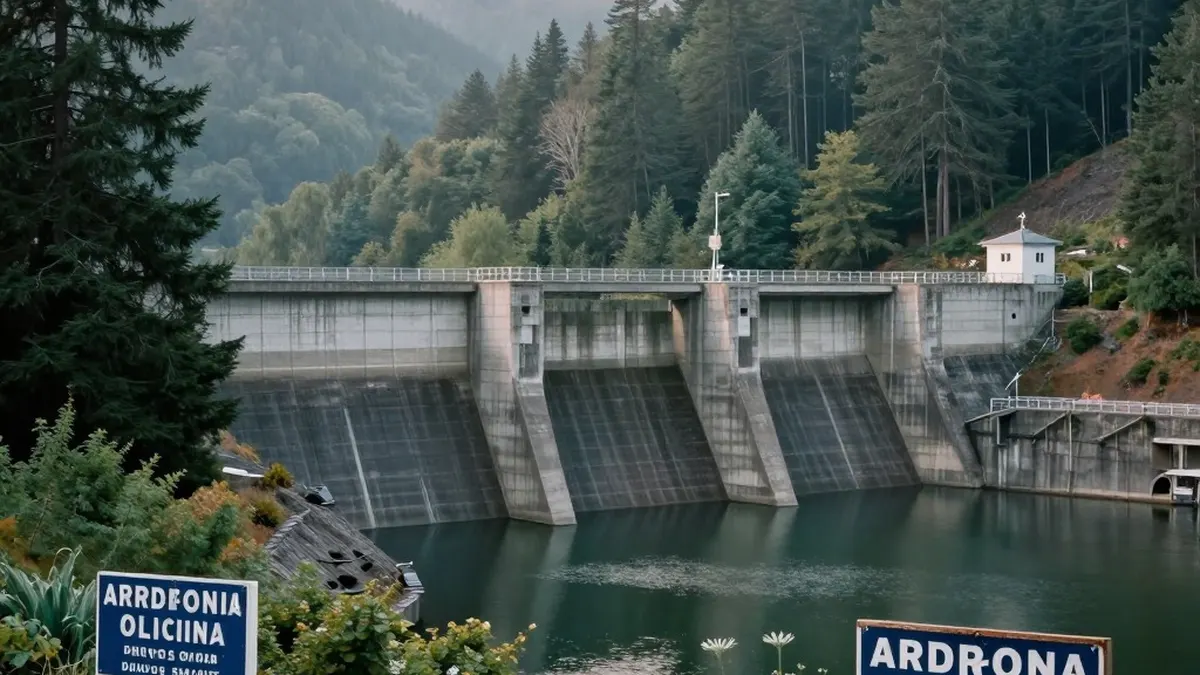
The most visible legacy is Shasta Dam, a 600ft structure built with 15m tons of concrete. It anchors the Central Valley Project, moves water south to farmland and can power as many as 710,000 homes. Funded by Roosevelt's administration after lobbying by Californians including Francis Carr, it employed almost 5,000 people at its peak. Civilian Conservation Corps camps also opened in the county, and Redding received federal money for a fire station, post office, bridge and veterans memorial building.
Richard Walker of UC Berkeley said such projects convinced people the government cared and let them take part in improving their own communities. Strategist Bob Mulholland, who died shortly after speaking to the Guardian in 2025, said the dam produced lasting thanks toward Roosevelt and the Democrats. Postwar growth in timber, plentiful mill and union jobs, and the building of Interstate 5 in the 1960s kept the county strongly Democratic. Kennedy visited twice, and Shasta gave him some of the highest support of any county in California.
Then the national coalition began to fracture. Many white southerners left the party after the civil rights era, and Lyndon Johnson was the last Democratic nominee to win a majority of white Americans. Historian Harvey Kaye argues that business groups and conservatives waged a campaign against Roosevelt's legacy, weakening unions, and that Democrats later turned away from the working class. Shasta stayed blue a while longer, but trouble was approaching for its mills.
The county now stands as a case study in the party's difficulty winning back rural America, even as Democrats appear on track to regain key seats in this year's midterm elections.
Source: The Guardian