Oil Price Surge From Iran War Pushes European Governments to Urge Restraint
As energy costs climb ahead of winter and protests spread across the continent, several Western European governments are warning against a renewed US-Israeli military campaign on Iran.
By True Press Post Staff ·
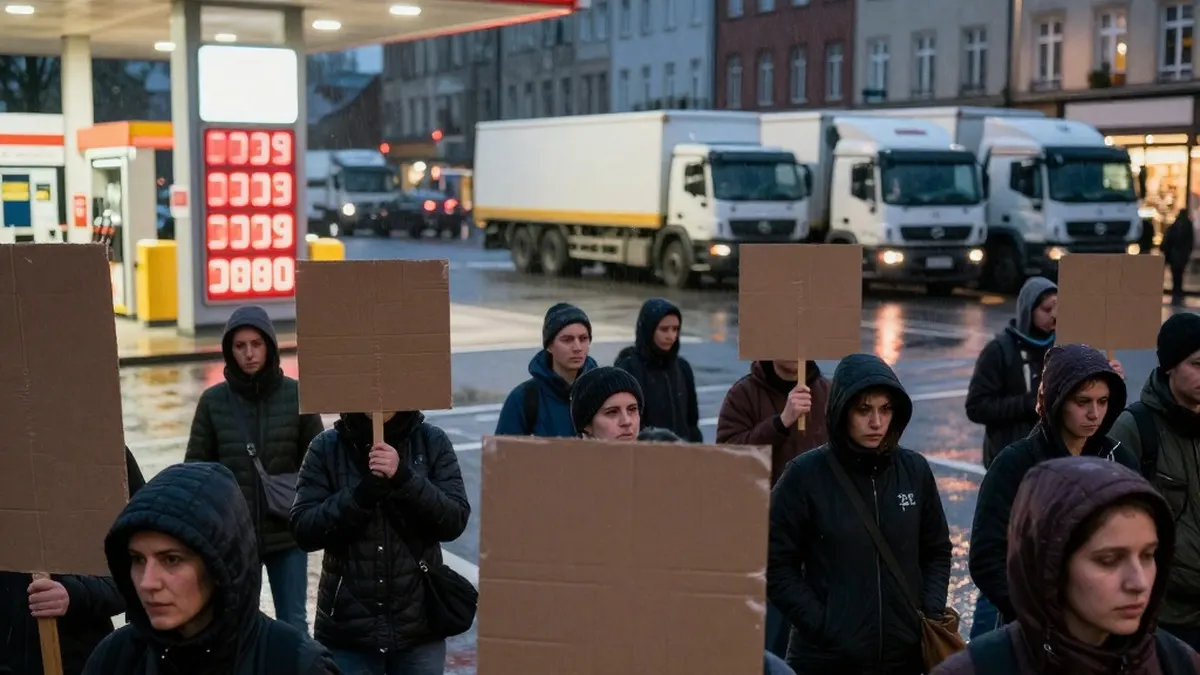
Several Western European governments have voiced opposition to a possible resumption of the war on Iran, as soaring oil prices deepen a cost of living crisis across the continent. Germany and the UK, which first stayed quiet on the US-Israeli bombardment, are now calling for diplomacy to end a conflict that has disrupted global oil supplies.
The shift drew a pointed reaction on Sunday from Iran's Foreign Ministry spokesperson, Esmaeil Baghaei. In a post on X, he recalled German Chancellor Friedrich Merz's comment during Israel's June 2025 military campaign: "This is the dirty work Israel is doing for all of us." Baghaei contrasted it with recent German warnings against renewed attacks, and quoted Friedrich Schiller's The Maid of Orleans on reason being dragged toward an abyss by madness.
When the US and Israel launched their attacks on February 28, Britain, France and Germany issued a joint statement. It condemned Iran's retaliatory strikes on countries in the region "in the strongest terms" but did not criticise the opening US-Israeli strikes, while calling for negotiations. Nearly eight months on, European governments are explicitly cautioning against another campaign.
On Friday, the foreign ministers of Britain, France, Germany and Italy met counterparts from Turkiye, Saudi Arabia, Pakistan and Egypt in Istanbul to discuss the conflict and the Strait of Hormuz. French Foreign Minister Jean-Noel Barrot said further escalation between Iran and the US "would create nothing but losers" and would seriously affect hydrocarbon prices. He said the group would urge both sides to show the utmost restraint.
Europe is not united, however. Spanish Prime Minister Pedro Sanchez has consistently opposed the campaign and, at this month's European summit, called the war "illegal, unjust and unjustified". Differences have also surfaced over military bases and airspace. Germany said early on that it would not restrict US use of its bases, including Ramstein. Britain first withheld permission for the opening attacks, then allowed limited defensive strikes, and later widened that to cover missile sites and capabilities used against shipping in the Strait of Hormuz. France allowed US support aircraft at Istres for defending regional partners and later blocked a weapons flight to Israel. Spain refused attacks from the Rota and Moron bases and closed its airspace to US aircraft involved in the war. President Donald Trump called Spain "terrible" and threatened to cut off trade.
The economic toll is a central concern. European Commission President Ursula von der Leyen said on October 16 that "households and industry are paying the price for a war far beyond our borders". She said Europe's imported fossil fuel bill had risen by 106 billion euros, gas prices were up about 140 percent since late February, and diesel prices had doubled. Brent crude closed at $72.48 a barrel on February 27, reached $126.41 at the end of April, and remains well above $100.
Mark Hilborne of King's College London said the war has had a "direct, measurable and quite a rapid impact" on European prices, pointing to fertiliser, where urea prices have risen by roughly 70 percent, and to higher shipping insurance costs and longer rerouted journeys. He also said resistance among European countries to supporting the US could grow.
The search for relief has caused further friction. Washington has pressed European governments to release emergency diesel stocks, while Trump eased restrictions on Russian diesel to lower prices, a move criticised by Ukraine and its supporters, who warned it would strengthen Moscow's war effort.
Protests over living costs, housing, wages and public services have been seen in France, Belgium, Italy, Spain, Portugal, Greece and Albania. They are not a single coordinated movement, but experts say the cost of living crisis, worsened by war-related price rises, links them. Sociologist Donatella della Porta said young protesters fear their future will be stolen "not only by global warming but also by wars in which they will be sent to die on the battlefield".
Source: Al Jazeera